3 Weeks in Sri Lanka


https://youtu.be/B4XZW8JQNwc?si=pzzqKbjv084H8dpi


Hints for Travel in Sri Lanka

Take the train!

Be sure to travel on the trains of Sri Lanka. They are older, reasonably priced with frequent departures. Windows can open, and there is sometimes an observation car at the very back where passengers can gaze out the back at the tracks. The train takes you through beautiful countryside, tea plantations, pretty towns, high up into the clouds or down in the lush valleys of Sri Lanka. If you like trains, you will love the trains of Sri Lanka! The one north to Jaffna was bouncy. The train to Ella was crowded with tourists, but most often it is the people of Sri Lanka who regularly ride the trains - students, workers, families.

Hire a car and driver

When our journey took us to places without train connections, we hired a car with a driver. We asked the staff at our hotels to arrange for a car and driver. This always worked out.  We  talked at length with our drivers, who pointed out the sights along the way. As we chatted, we got good insight into the people and politics of Sri Lanka. The drivers were committed to getting us to our destinations, which were sometimes difficult to find. The main roads and highways are newly paved and very good.

Use the hotel to make travel, tour arrangements 

We also had the hotel staff arrange for tuk tuk tours in Colombo and in the ancient Buddhist kingdoms. We asked for a driver who was also a tour guide. Again, this always worked out! Sometimes it was raining hard at the northern Buddhist sites, so it was wonderful to have a driver near with dry transportation.

Chat with the people

The people of Sri Lanka are extremely friendly, interested and interesting, and happy to talk with tourists. Many speak English. We had the opportunity to talk at length with many people in Sri Lanka, and this added so much to our trip. Travel around the island and strike up conversations with the welcoming people of Sri Lanka.

Try local cuisine

Western food is readily available, however, we preferred the tremendous variety of curries with rice.  Dal (lentil) is served at every meal, including breakfast. We enjoyed the 'hoppers' - egg hoppers and string hoppers - a delicious breakfast food. Fresh fruit - lots of it-  is always served. What a pleasure to have so much fresh fruit - banana, pineapple, passion fruit, mango. The Sri Lankan diet is healthy, fresh and delicious. The dal is easy to digest. We had no problems anywhere with the food.

Prepare for dengue

Mosquitoes carry disease, and Sri Lanka has dengue. Take protective clothing and bug spray with Deet, and monitor the danger before you go. We took bug spray with Deet, and noticed it was not readily available in Sri Lanka.

Climate varies throughout the island

The climate of Sri Lanka varies greatly depending on the area of the island you are in and the time of year.  We experienced sunny hot weather at the beach, but in the midlands it was warm with rain. High in the hills, it was rainy and cool enough to need sweaters. Check this out before you go and take appropriate clothing.

Wild elephants are beautiful!

We stayed at a lodge in Polonnaruwa where wild elephants came right up to the fence. They roamed and lived wild around the ancient man-made lake. We watched them travel across the marshlands! The lodge staff were reverent and respectful of these majestic visitors.
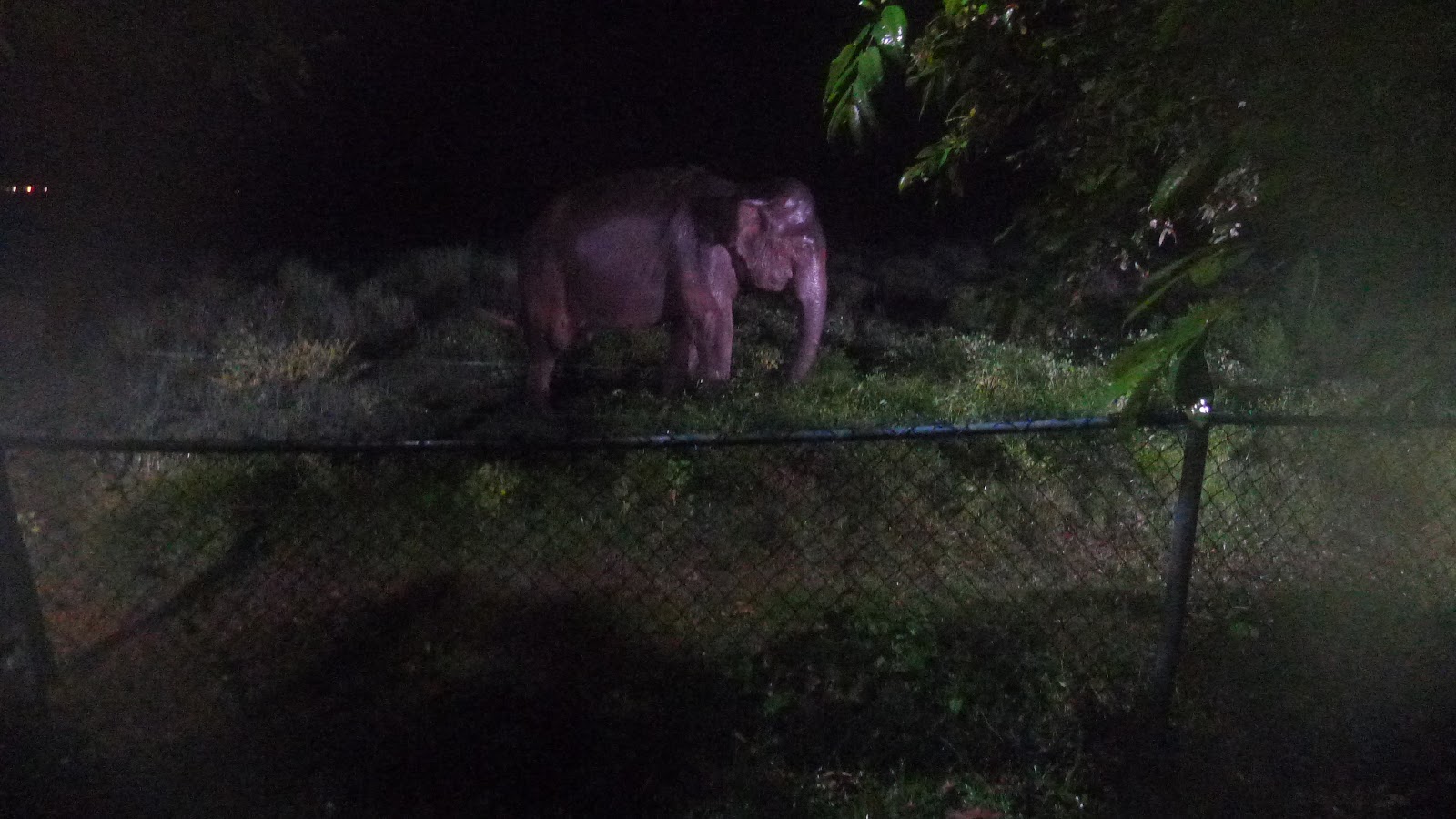
Lodge staff knocked on our door. "The elephants are here!" 

My camera is not on zoom. The amazing wild elephants of Sri Lanka!

Beautiful and healthy wild elephants of Sri Lanka


Buddhas in Singapore

The Asian Civilizations Museum, Singapore, 9 Stunning Buddhas.

Statues and figurines of the Buddha have inspired devotees through the ages.  In Singapore I first discovered for myself the calming and majestic, yet humble, beauty of human depictions of the Buddha. The Asian Civilizations Museum in Singapore has an extensive collection of Buddhas, presented in an elegant, dramatic manner. 

What is it about these images of Buddha that is so compelling? Does the Buddha remind us that although life is challenging in so many ways, we can find peace and hope?

Gentle loving kindness, reflection, mindfulness, joy and gratitude...... enjoy these ancient treasures from the Asian Civilization Museum in Singapore.


“Resolutely train yourself to attain peace”  the Buddha.


Meditation can help us embrace our worries, our fear, our anger; and that is very healing. We let our own natural capacity of healing do the work. Thich Nhat Hanh


Let us fill our hearts with our own compassion - towards ourselves and towards all living beings. Thich Nhat Hanh


See majestic Buddhas from Bagan, Myanmar

Here are more beautiful Buddhas from the Victoria and Albert Museum in London, England.


Beautiful chanting......


Beautiful Buddhas in London, England


Victoria and Albert Museum, London, England

Buddha Through the Ages as Portrayed by Many Cultures


It was an unexpected delight to further my photographic collection of Buddha images in London, England, at the Victoria and Albert Museum. The delicate sculptures of the Buddha are small, but elegant and stunning! 

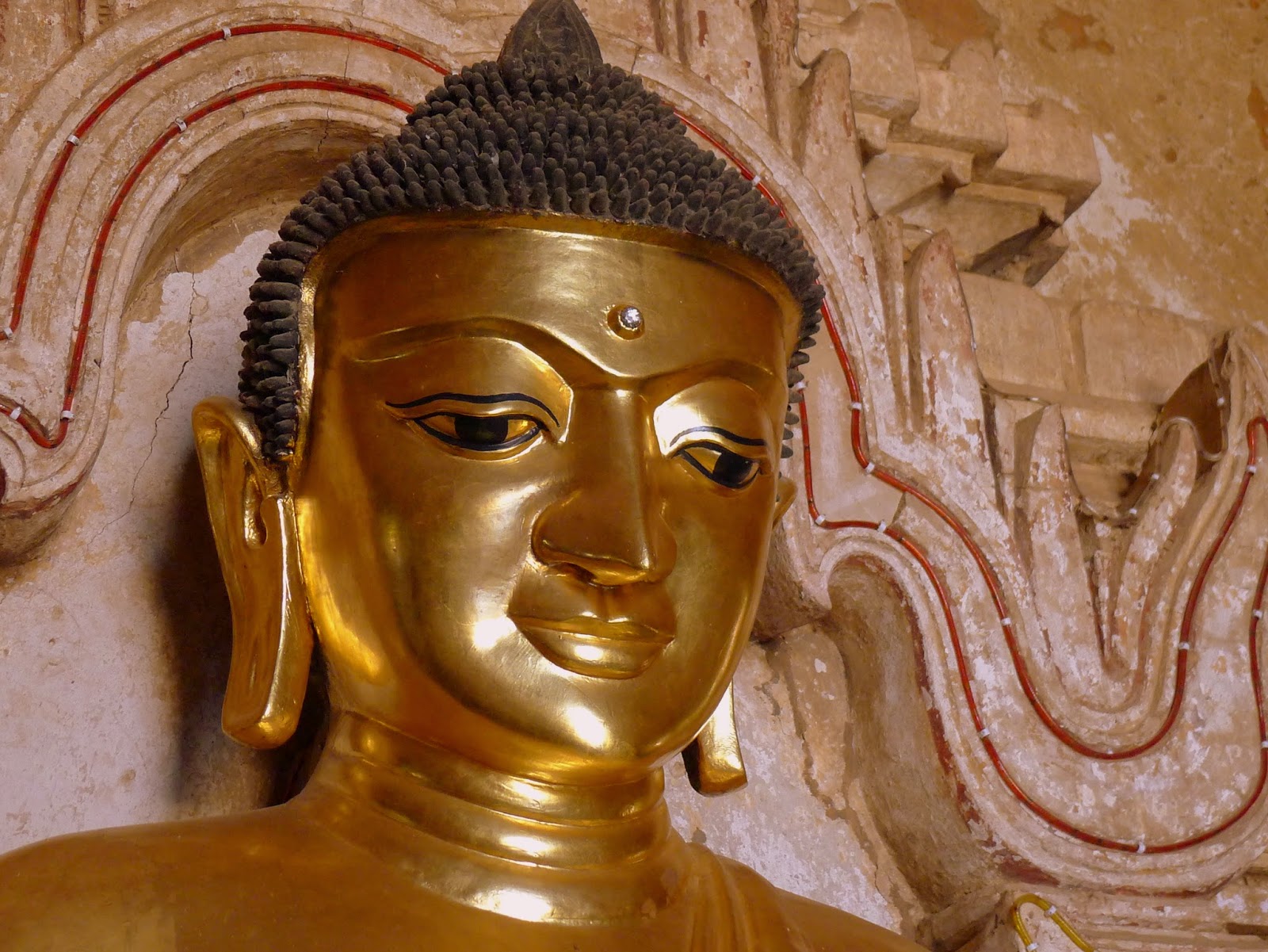
Each expression of Buddha glows with gentle kindness.  The mudra, or meaningful hand gestures, tell of the teachings of the Buddha.  

These ancient figurines of Buddha were of bronze or other metal, and so they have survived through the ages. This is a lovely collection in a museum that is, in all ways, astonishing. 


We missed the Radiant Buddha, which was not on display....... and so I must return to London and the Victoria and Albert museum to view this famous depiction of the Buddha.   

Enjoy these beautiful images....


“We will develop and cultivate the liberation of mind by lovingkindness, make it our vehicle, make it our basis, stabilize it, exercise ourselves in it, and fully perfect it.” The Buddha


We have more possibilities available in each moment than we realize. Thich Nhat Hanh


Do not dwell in the past, do not dream of the future, concentrate the mind on the present moment. - Buddha


You will not be punished for your anger, you will be punished by your anger. - Buddha

   
See majestic and beautiful Buddhas from Bagan, Myanmar

View more beautiful Buddhas in Singapore.


Beautiful Buddhas in Bagan, Myanmar

Serene Buddha of Myanmar

This post is from 2012, just before President Obama traveled to Myanmar.

The Buddhists of Myanmar revere the ancient, sacred statues of Buddha found throughout Burma (aka Myanmar). A place to view towering and elegant statues of Buddha is in Bagan, Myanmar. Bagan is a 'must see' in Myanmar. It is not yet a UNESCO world heritage site....but hopefully one day it will be.

We traveled on a slow tourist boat  up the Irrawady river from Mandalay to Bagan. The trip was a full day. We boarded in Mandalay at dawn and arrived in Bagan after dark. We had made arrangements before-hand to be picked up at the landing site and taken to our hotel. This you must do in Myanmar. 

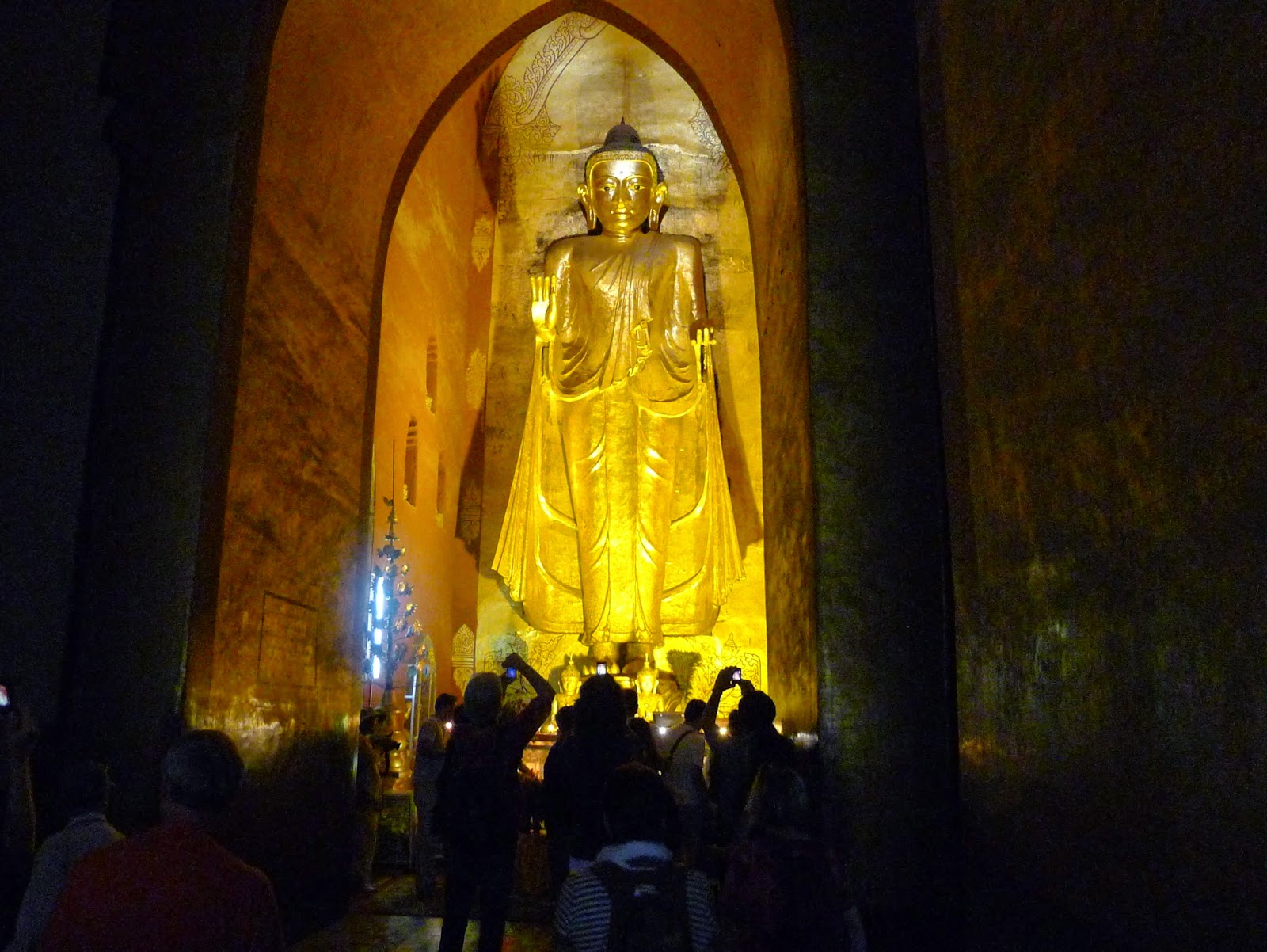
Many of the stunning, towering Buddhas of Bagan are covered in gold leaf. These are huge sculptures of Buddha, that have survived for hundreds of years in the protective stupas and temples of Bagan. 

The temples, monasteries, and pagodas of Bagan were constructed between the 11th and 13th centuries, when the ancient city was the capital of the region of Pagan, later to be known as Myanmar or Burma. 

Of the 10,000 original structures, just over 2000 remain.  This amazing sight is particularly gorgeous at dawn or sunset.


Placing gold leaf  on Buddha

“Know from the rivers in clefts and crevices: those in small channels flow noisily, the great flow silent. Whatever’s not full makes noise. Whatever is full is quiet.”
The Buddha


“A further sign of health is that we don't become undone by fear and trembling, but we take it as a message that it's time to stop struggling and look directly at what's threatening us. ” 
― Pema ChödrönThe Places that Scare You


Mudra - meaningful hand gestures
“nothing ever goes away until it has taught us what we need to know” 
― Pema Chödrön


One of four towering buddhas, facing four different directions
“When we protect ourselves so we won't feel pain, that protection becomes like armor, like armor that imprisons the softness of of the heart.” 
― Pema ChödrönWhen Things Fall Apart: Heart Advice for Difficult Times

Revered
The Buddha statues of Bagan are magnificent. They tower, in their original halls of worship, so majestic and powerful, yet so gentle and kind. They loom large, but each one provides, through expression and mudra (hand gestures) teachings of the Buddha.


Bagan, Myanmar Sunrise.


Buddhist Monks in Bagan, Myanmar
See more beautiful Buddhas from the Victoria and Albert Museum in London, England.

View beautiful Buddhas from Singapore

UNESCO World Heritage Cella Septichora, Early Christian Burial Site in Pecs, Hungary


UNESCO Early Christian Burial Site of Sopianae, Pecs, Hungary
 A few hours south by train from Budapest is Pecs, a cultural center of Hungary, a lovely medieval and modern university town with multi-cultural roots. It is also home to the UNESCO World Heritage Site, the Early Christian Necropolis of Pecs.  This archaeological site is part of the ancient city of Sopianae, founded by the Romans almost two thousand years ago and once home to 10,000 people. The city of Pecs, with a population of 150,000, now completely overlays the ancient town of Sopianae.
Early Symbol of Christianity at Pecs


The Romans introduced Christianity to this part of Hungary and by 400 AD,  the trading center of Sopianae had a significant Christian population. Three ancient Christian burial grounds are just outside the old walled town of Sopianae. Here are tombs, numerous family burial chapels, monuments and mausoleums. This type of Christian burial site, with many grouped stone ceremonial buildings and chambers, was unique for this era in Europe. The well-preserved 1600 year old site is, therefore, historically important. 

From the town center in Pecs we easily walked to the UNESCO World Heritage site, the Cella Septichora, Early Christian Cemetery. The burial chambers excavated here, around the Szent Istvan Square, date back to the 4th century.


Cella Septichora, Early Christian Cemetery, UNESCO World Heritage site at Pecs, Hungary


Early image of Mary?


                                                                                                   The UNESCO Center entrance is a low, concrete structure, nestled into the surrounding public plaza and steps. It's easy to miss. Once inside, descend below ground to the courtyard chamber, well-lit due to a glass roof that serves as the floor of the public square above. Through tunnels we ventured into deeper burial chambers with remnants of biblical frescoes and Christian and Roman imagery. 

In the two story barrel-vaulted Saint Peter and Paul Chamber, the Apostles point to an early Christian symbol of Jesus,  a circular Christogram with Greek letters. The garden of Eden and other biblical stories are depicted as well as a faded portrayal of a woman, possibly the Virgin Mary. It was fascinating to see these Christian images which were created only a few hundred years after the death of Christ. 

We later toured the nearby Mausoleum, with a large sarcophagus and 4th century images of Daniel and lions, and Eden. 

UNESCO World Heritage Site Cella Septichora, Early Christian Necropolis, Pecs, Hungary

Fresco in Saint Peter and Paul Chamber, UNESCO

This World Heritage site is well protected and beautifully displayed. It is one of the largest and best preserved early Christian burial grounds in Europe. We found it interesting, well-presented, reasonably priced and like most UNESCO World Heritage sites, invaluable for its preservation of human history and culture. In Pecs, be sure to seek it out. The Center is also used for current cultural events by the citizens of Pecs. The UNESCO site was closed on Mondays.


Apostles point to early Christian symbol of Jesus, UNESCO World Heritage, Pecs, Hungary

More information on the World Heritage Pecs site.


Pecs, Hungary - medieval roads

Pecs, Hungary, with temporary Leonardo da Vinci exhibit -the Horse.
Center Square of Pecs, Hungary

13 Travel Tips


Udaipur, India 
1. In your 'carry-on' take a change of clothes, medications, electronics, money, credit cards, passport, ID, travel documents and your camera. If your checked luggage is lost, you will survive.

    2.   Pack light, travel light. If you must shop for gifts, buy light, small items. In Budapest buy paprika; Thailand, silk scarves. Buy heavier items at the end of the trip. Shopping takes time, money and weighs you down. Resist.

3. Read up before you go to appreciate the cultural experience. Learn at minimum a few words of the local language, such as ‘thanks’ and ‘hello’. 
Jaipur, Rajasthan, India


Small plates in Bagan, Myanmar
    4.  As a pedestrian, be aware. Cross streets with the locals. Not every city is pedestrian friendly – some are downright hostile.

    5.  Beware the ‘soft’ scams. Even the most experienced travelers can be fooled. Don’t go with strangers who approach you on the street and don't take their advice. Make your own plans and stick to them.

    6. Use public transportation from the airport. Research this before you go and save cash and time. Singapore, Athens, Rome, London, Amsterdam, Paris  all have fast public transit from the airport. Sometimes your hotel can arrange for a pick up at the airport. This may be the best option in cities like Delhi or Hanoi. Ask your hotel for a good  local travel agent for day trips, too. Generally, they won’t steer you wrong.

    7.  Enjoy great food  as you travel, but use common sense.  Creamy foods should be cold, hot foods should be hot, not lukewarm. Take medications to combat diarrhea, constipation and vomiting.  

Shopping in Udaipur, India


 8. Arrive early. Check departure times and departure locations. Where is the train station or bus depot? Leave enough time. 


    9.   Buy a good guide book. E-readers are fine for reading indoors, but not great as 'on the street' travel guides. They are hard to read in daylight and difficult to flip through when on the street. 

       10. In the tropics, stay cool. Get a room with air conditioning. You will need it to get a good sleep. Mosquitoes? Tuck the mosquito net under the mattress really well! Cover up and wear bug repellent. 


View from the hotel room in Delhi.
11. Resist riding on motorcycles or mopeds. We have encountered MANY injured travelers. Thinking of deep sea diving, or para-sailing? Safety is not always a priority on the tourist beach.   CAUTION!  Is the equipment truly safe, is the training excellent, is the company reputable, are you insured for injury?
     
    12.  Buy medical travel insurance.You think you are healthy and nothing will happen to you? Maybe not, but maybe so. Get your shots before you travel, too.

   13.  Keep your valuables secure on your person. Zip them up.

Mount Popa, Myanmar


We climbed to the top of Mount Popa, 777 steps.


Rendition of Nat spirits at Mount Popa
Nat Worship in Burma.

Some Buddhists in Myanmar, especially those in rural areas, worship Nats.  Nats are uniquely Burmese. They are spirits or guardians and protectors with dominion over people or things.  The worship of Nats  pre-dates Buddhism,  which became the national religion of  Burma in the eleventh century.   Nat worship was a form of animism, especially popular with the hill peoples of Myanmar, but practiced all over the country.
Mount Popa, Burma
Mount Popa, an extinct volcano in central Burma, was  home of the most important Nat, the Lord of the Great Mountain, and his Sister Lady Golden-Face.  In the ninth century they became the guardian gods of the city of Pagan.  Nat worshippers travelled to Mount Popa for a feast at the full moon in December.  Animals were sacrificed,  people drank palm toddy wine and danced. Full moon festivals were common throughout Burma.

Atop Mount Popa, monkey surveys Myanmar forest.
In the town below Mount Popa
Although pre-Buddhist practices, such as astrology, alchemy and the worship of Nats, were suppressed when King Anawratha unified Burma in the eleventh century and made Buddhism the national religion, Nat worship continued. The King eventually integrated Nat worship into Theravada Buddhism,  added one of his own to the traditional 36 primary Nats, and replaced other Nats with his own dead war heroes. 
Today in Myanmar, Nat worship continues, side by side Buddhism, with pilgrimages and festivals held throughout the country. Nats are similar to Saints. Some drink and smoke. Others protect the environment and dwell in the forest or mountains. Environmental destruction could bring their wrath.   Nats are spiritual friends of the Burmese people.


Nats guard Buddha in Bagan. Stop, and look, they seem to say.

Mount Popa is a day trip from Bagan. On the way to Mount Popa from Bagan, we stopped to see how palm oil, palm candy (jaggery) and palm toddy wine are made, the old fashioned way. The drinking of toddy, wild dancing and traditional hsaing music induce the trance at a Nat festival, and assist in the belief that revelers are possessed by the Nats.


Palm Toddy


Grinding to make palm oil

Mount Popa is an important shrine to Nat worship. Monkeys inhabit the temples. Fun to watch but keep your distance as they can be aggressive. The climb up to the top, 777 steps in bare feet, was not too difficult. 

Mount Popa does not have the beautiful old Buddha statues, pagodas and temples of Bagan, but Nat worship is still prevalent in Myanmar and Mount Popa is culturally important.  


In Mandalay, Myanmar